Vaccinations Saudi Arabia requires
The Saudi Ministry of Health publishes the health requirements for Umrah and Hajj each year. For 1447H (2026):
- Meningococcal meningitis, for every pilgrim: a quadrivalent (ACYW) or pentavalent (ACYWX) conjugate vaccine received within the last 5 years, or a quadrivalent (ACYW) polysaccharide vaccine within the last 3 years, and in either case at least 10 days before arrival. The certificate must name the vaccine; if it does not, Saudi Arabia counts it as valid for 3 years only. Ask the centre which type you are given; the conjugate lasts longer.
- Polio, for everyone arriving from Pakistan (and Afghanistan), whatever their age or earlier doses: at least one dose of bivalent oral polio vaccine (bOPV) or inactivated polio vaccine (IPV). Saudi Arabia recommends the IPV dose within the previous 12 months, or the OPV dose within the previous 6 months, and in either case at least 4 weeks before arrival; the centre in Pakistan follows those windows. Travellers from Pakistan may also be given a dose of OPV on arrival in Saudi Arabia.
- COVID-19: proof of vaccination or immunity is required for pilgrims over 65, pregnant women, and those with chronic heart, lung or kidney disease, hereditary blood disorders such as thalassaemia or sickle-cell anaemia, immunodeficiency, cancer or a chronic neurological disease; for everyone else it is recommended.
- Recommended, not required: the seasonal influenza vaccine, and routine vaccinations kept up to date.
- Yellow fever applies only to arrivals from countries where it occurs; Pakistan is not one.
Pakistan's vaccination card, since 15 September 2026
Pakistan's Border Health Services directed that from 15 September 2026 Hajj and Umrah travellers must carry vaccination proof integrated with NADRA, covering polio, meningitis, yellow fever (where relevant) and influenza, and that no other vaccination card is accepted after 14 September 2026. The Federal Government Civil Dispensary is named as the authorised centre, with vaccination and registration also to be provided at international departure areas; travellers needing vaccination at the airport are told to arrive six hours before the flight. Do not leave it to the airport: get the card at an authorised centre weeks before, within the timing windows above.
Medicines
- Your regular medicines for the whole trip plus a week, in their boxes, with the prescription. Pakistan to Saudi Arabia is no problem for ordinary medicines; anything controlled needs the prescription.
- A small kit: paracetamol, an oral rehydration salt, something for diarrhoea and for constipation, antihistamine, a blister plaster, petroleum jelly for chafing in ihram, sunscreen, lip balm.
- Diabetics: enough insulin, kept cool, and sugar. Heart and blood-pressure patients: the medicines and a note of the diagnosis in English.
- A medical fitness certificate is required for government-scheme Hajj before the second instalment; the ministry sets the form.
Heat
Makkah is hot in every month and dangerous in summer; Hajj 2027 falls in mid-May. Drink before you are thirsty, carry water, use an umbrella (men cannot cover the head in ihram), walk on the shaded side, rest between prayers. Heat exhaustion looks like dizziness, headache and nausea; sit in shade, drink, and ask for help.
Packing, one bag
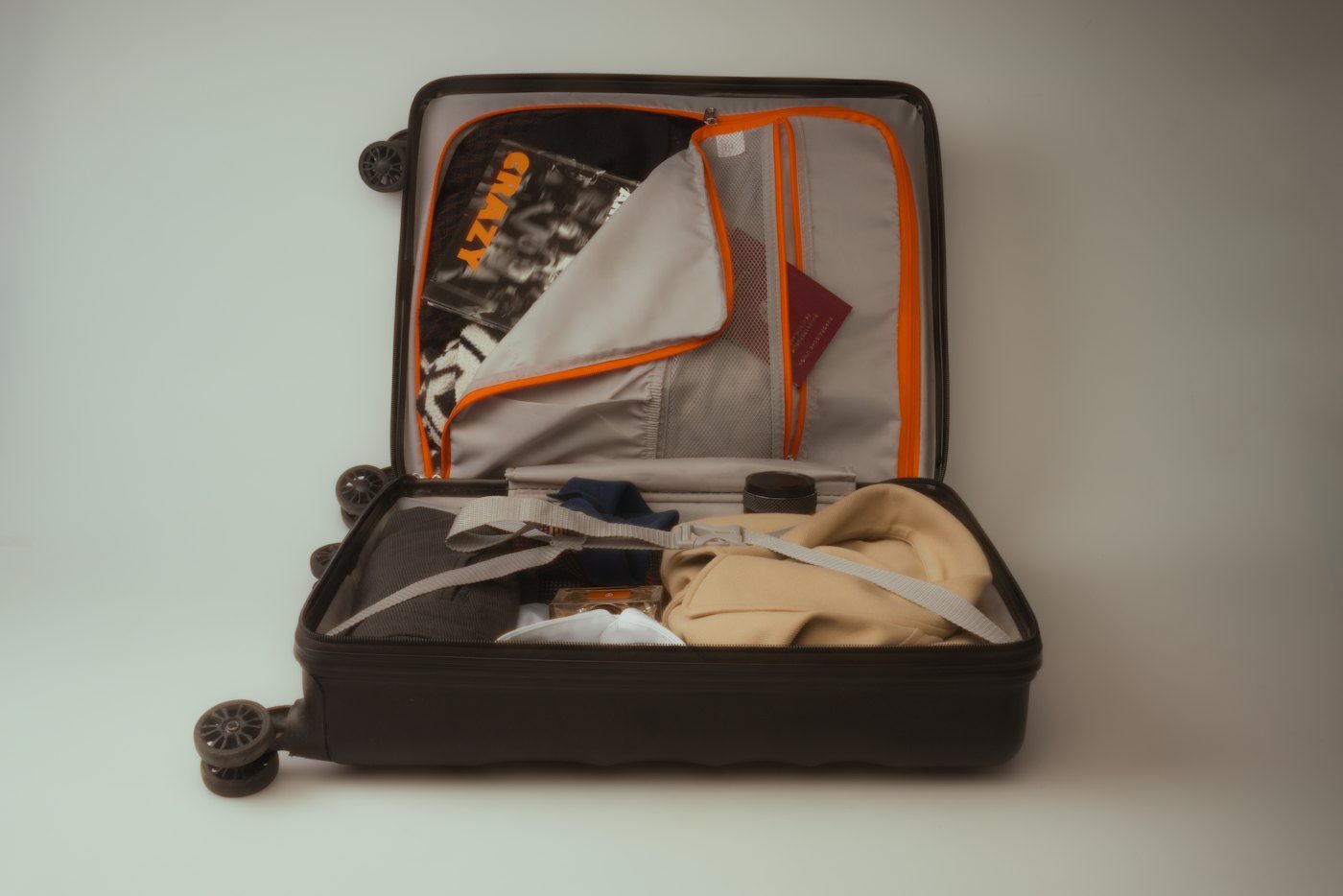
Documents: passport, visa printout, Nusuk permit on the phone and printed, vaccination card, the agency's contact numbers in Saudi Arabia, a copy of the package, bank card, photocopies of everything kept separately.
Clothing: ihram (men, two sets), light loose clothes, an abaya or long loose dress (women), a light sweater for air-conditioned halls and Madinah nights in winter, comfortable sandals that can be slipped on and off, a small bag to carry them inside the mosque.
Useful: a foldable prayer mat, a small Qur'an or the app, an umbrella, a water bottle, a phone power bank, a plug adaptor (Saudi sockets are the UK three-pin type), a small padlock, a cloth bag for Zamzam and dates on the way back, a notebook with your du'a list.
Leave at home: jewellery, large sums of cash, anything you would be sorry to lose in a crowd.
Zamzam
Each departing pilgrim may take a sealed 5-litre bottle of Zamzam, bought at the airport-approved outlets, as checked baggage, subject to the airline's rules. Do not pack open containers.